Continue exploring the Canadian landscape in a new set of mini-courses. Saskatchewan is part of the vast Canadian Prairies, known for its endless horizons, golden fields, and the unforgettable beauty of its living skies.
Upgrade your skill level and widen your artistic horizon!
Saskatchewan is one of the mini-courses in the Canadian Landscape series. This time we will travel to the heart of the Prairies. The land is open and expansive, the horizon stretches infinitely, the grain elevators stand proudly against dramatic skies, the light changes endlessly, the storms roll in with breathtaking power, the sunsets burn with colour, and the winter frost transforms everything into quiet poetry.
The Sky of Saskatchewan
In Saskatchewan, the sky is not background.
It is space, movement, emotion, and scale.
This four-lesson watercolour series explores one of Saskatchewan’s most powerful and defining elements: its vast, expressive sky.
This course includes four fully guided lessons, each dedicated to a different type of atmospheric landscape. You will not only explore the theory of atmospheric perspective but also bring it to life through hands-on practice with watercolour techniques.
Through four atmospheric conditions: Sunset, Storm, Sunrise, and Frost, you will study light, colour temperature, mood, and compositional balance between land and sky. Each lesson combines structured practical exercises with one complete, expressive final painting.
The study process will be simple, stress free and understandable for every student. There will be a few of exercise that will help you to become confident in loose style landscape painting.
The course is suitable for students who are comfortable with basic watercolour techniques and want to deepen their understanding of atmospheric effects and large-sky compositions.
This course is suitable for all levels of watercolour skill. Although some experience would help you to feel more comfortable.
You will get access to all support materials immediate to your purchase. Please print them or make sure that they will be available at your device(s) for use during your study.
BASIC package for self-study

START ANYTIME

4 video lessons
6 hours of video tutorials
9+ practical exercises
4 final paintings

Three years access to all materials and video tutorials
Once you register and enroll for this course you will get access to the course content.
What is in the course?
Course Content
The schedule:
Lesson 1
Sunset
Fire Over Water
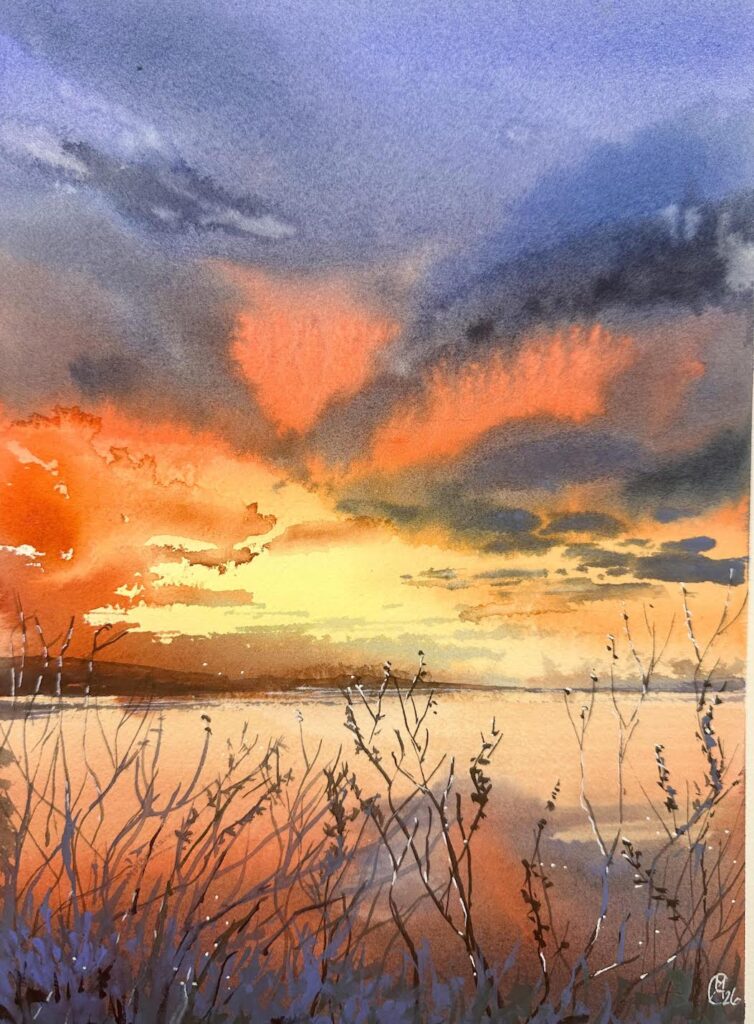
In this lesson you will learn about materials and tools. You will practice creating a beautiful sunset. You will learn how to preserve light, control intensity and create depth through atmospheric softness.
Lesson 2
Storm
Prairie Under Pressure
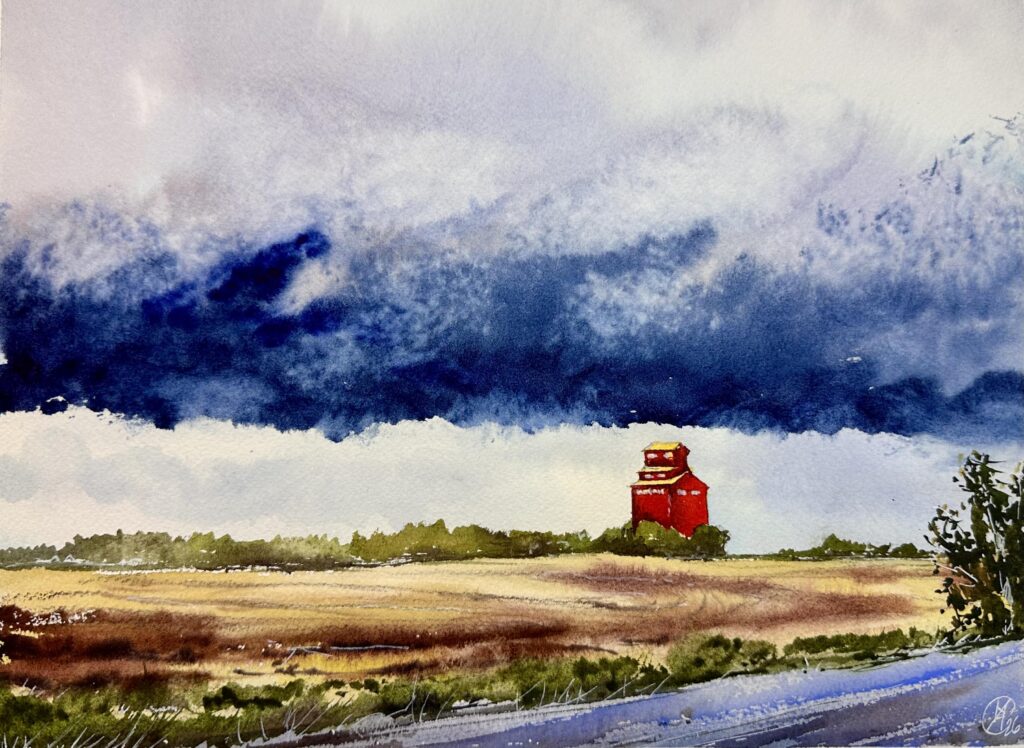
In this lesson you will learn how to paint the beautifully and dramatic Saskatchewan strom sky over open fields. . You will learn how to building depth in grey mixtures, understanding storm cloud layers and creating tension through value contrast.
Lesson 3
Sunrise
Quiet Prairie Awakening
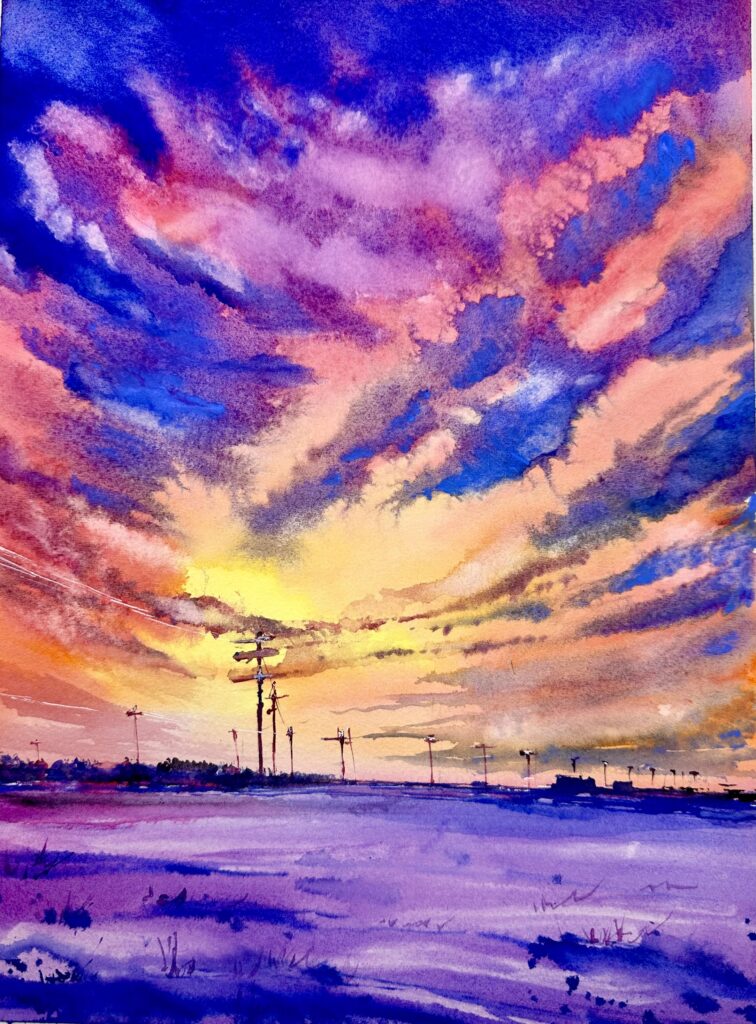
In this lesson you will practicing creating depth and value in the large panoramic prairie sunrise with dramatic cloud movement. You will focus on movement through brush direction, expressive sky energy and harmony and restraint.
Lesson 4
Frost
Silent White Prairie
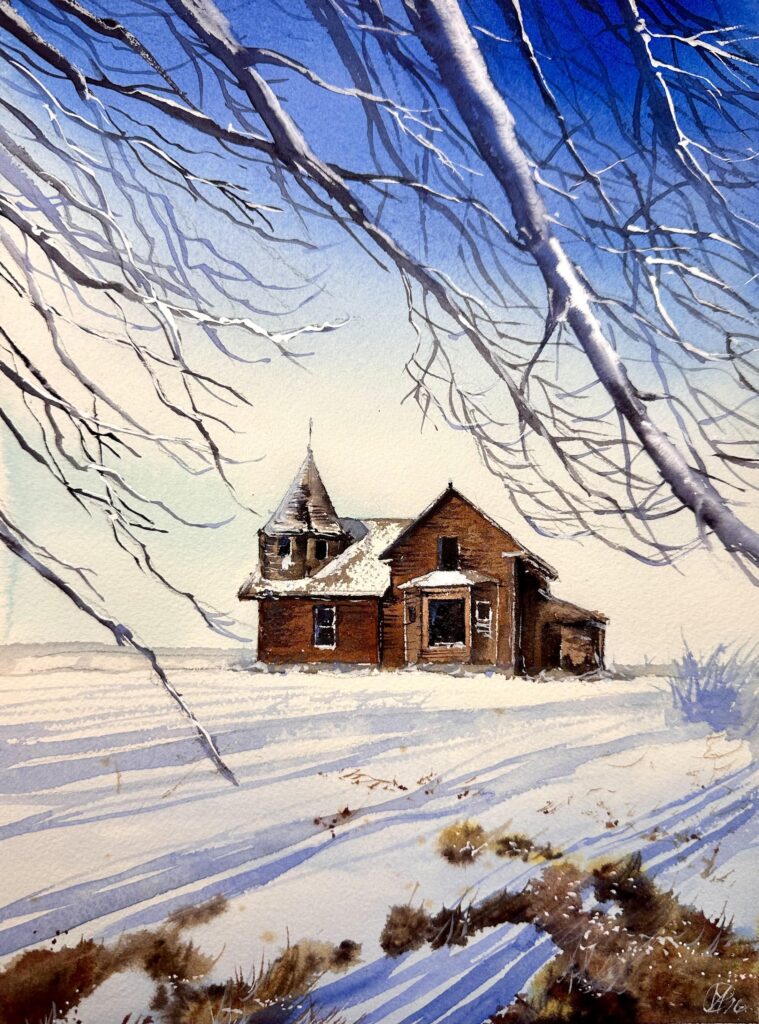
In this lesson you will practicing creating light and air in the winter Saskatchewan landscape with hoarfrost and quite sky. You will focus on painting white subjects, cold colour palette, subtle ronal contrast and atmospheric perspective in snow.
Student’s work

Laura 2026 
Laura 2026 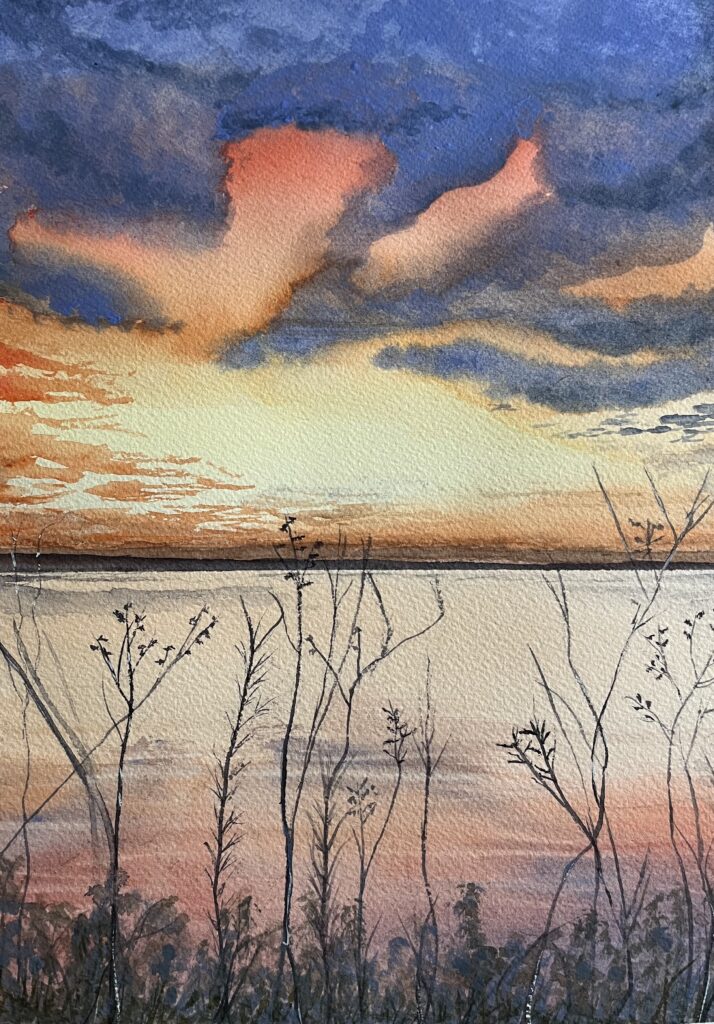
Laura 2026 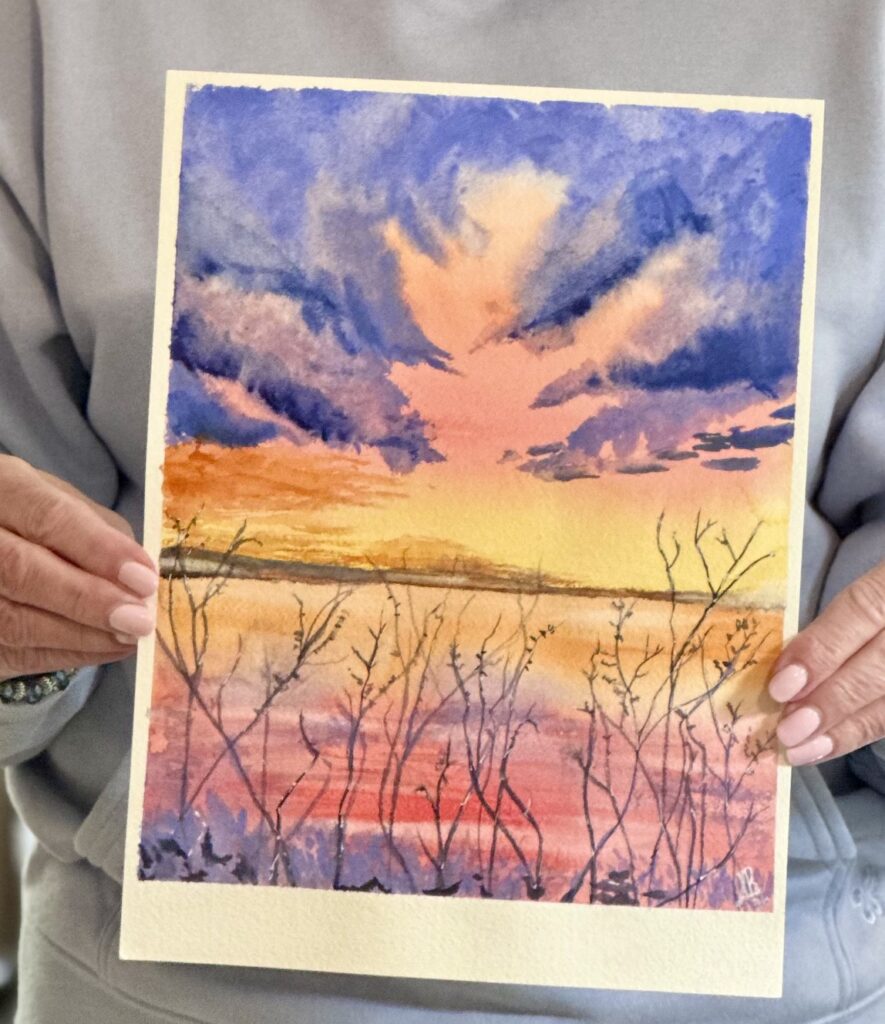
Sarah 2026 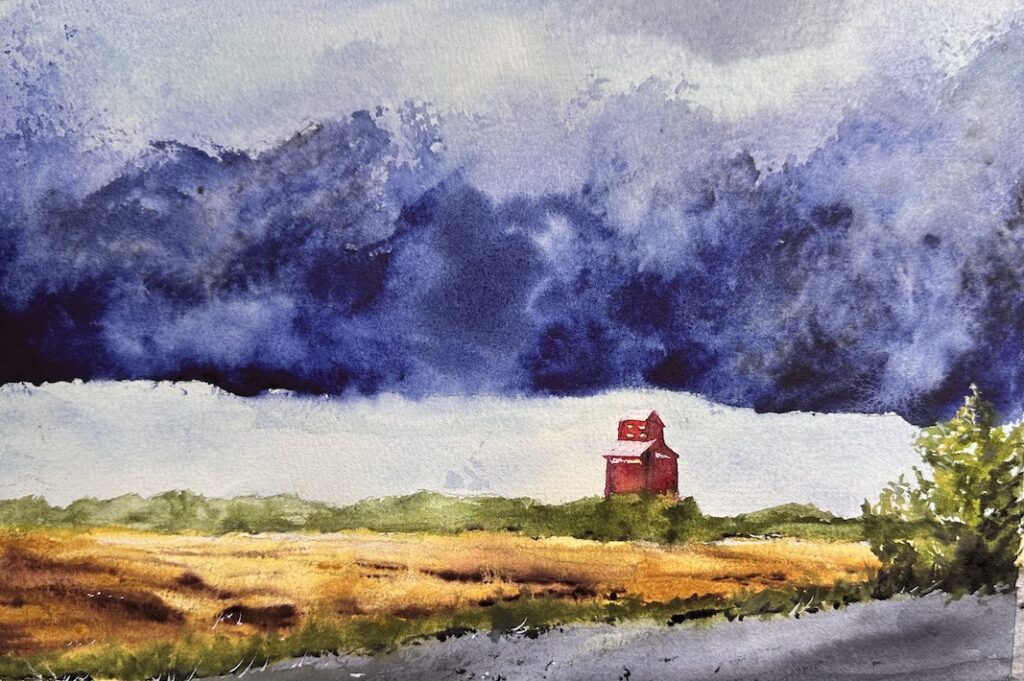
Sarah 2026 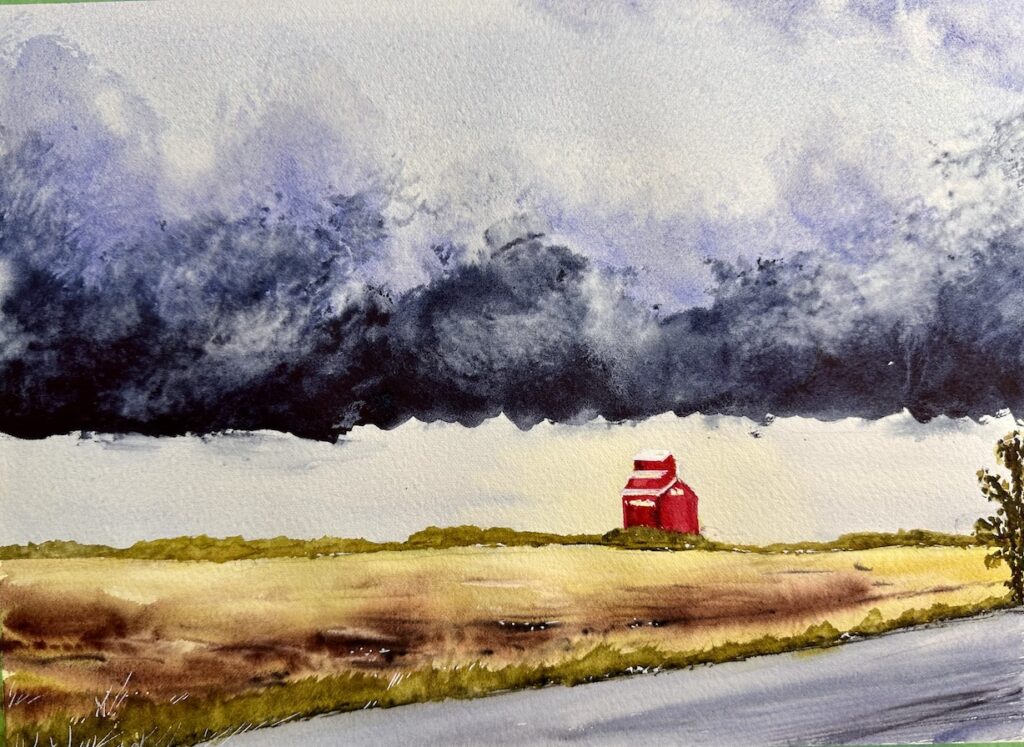
Laura 2026
Willing to discover more beauty of Canada?
Explore the Canadian landscape in the set of mini-courses. Travel with me from East to West painting the Atlantic ocean coast of Nova Scotia, fascinating landscapes of Newfoundland and Labrador, beauty of Prince Edward Island, breathtaking views of Quebec, fairy tale winter sceneries of Ontario, fantastic skies of Saskatchewan, and the natural beauty of Alberta and the British Columbia coast.
Upgrade your skill level and widen up your artistic horizon!
Choose the package that fits your lifestyle the best
ALBERTA

Alberta is one of mini-course of the Canadian landscape set of courses. You will travel through well known national parks Jasper and Banff.
You will practice to paint mountains, trees, forest lines and water surface reflection. You will experimenting with colour palette to create the illusion of depth of crystal clear turquoise lakes. You will finish at least four large paintings plus practical exercises.

FREE BASIC watercolour tutorial PINE TREE from course Canadian Landscape Alberta
PRINCE EDWARD ISLAND

This mini course takes you to one of the smallest provinces of Canada – Prince Edward Island. The island spans a spectacular stretch of land encompassing sand dunes, salt marches, remnants of an Acadian Forest, coastal headlands, beaches and sandstone cliffs.
In this course you will improve your skills in painting seascapes, coast lines, surf and sand. You will experiment with the colour palette to create waves, wet send, birds and reflections. You will finish at least four large paintings plus practical exercises.
FREE BASIC watercolour tutorial BALANCE from course Canadian Landscape Prince Edward Island
SASKATCHEWAN
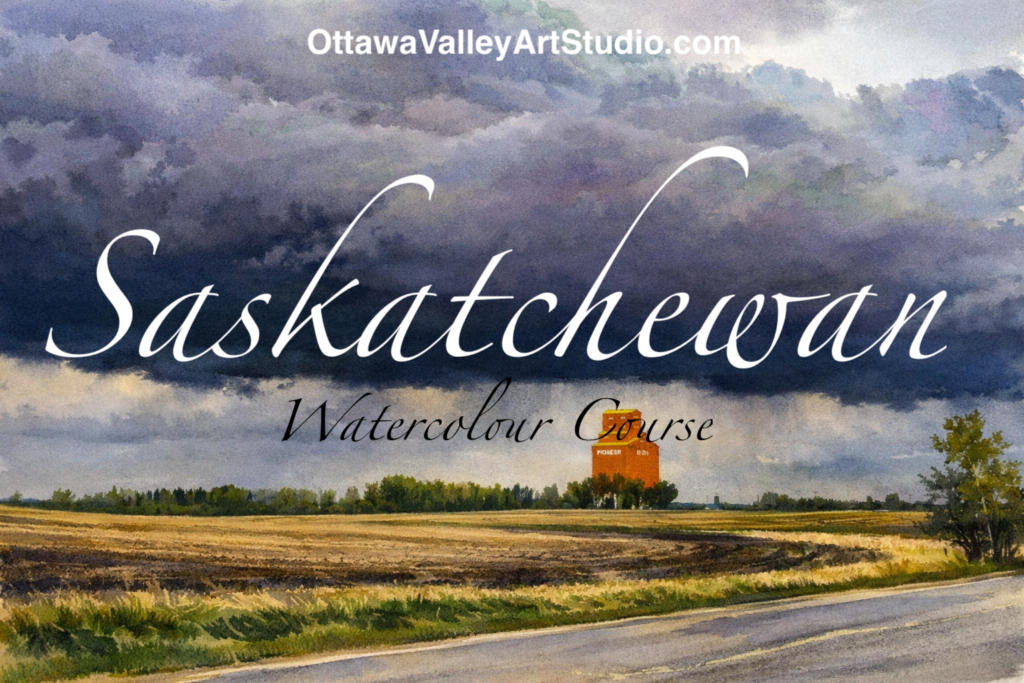
Saskatchewan is one of the mini-courses in the Canadian Landscape series. This time we will travel to the heart of the Prairies. The land is open and expansive, the horizon stretches infinitely, the grain elevators stand proudly against dramatic skies, the light changes endlessly, the storms roll in with breathtaking power, the sunsets burn with colour, and the winter frost transforms everything into quiet poetry.
Through four atmospheric conditions: Sunset, Storm, Sunrise, and Frost, you will study light, colour temperature, mood, and compositional balance between land and sky. Each lesson combines structured practical exercises with one complete, expressive final painting.
FREE BASIC watercolour tutorial CLOUDS from course Canadian Landscape SASKATCHEWAN
QUEBEC
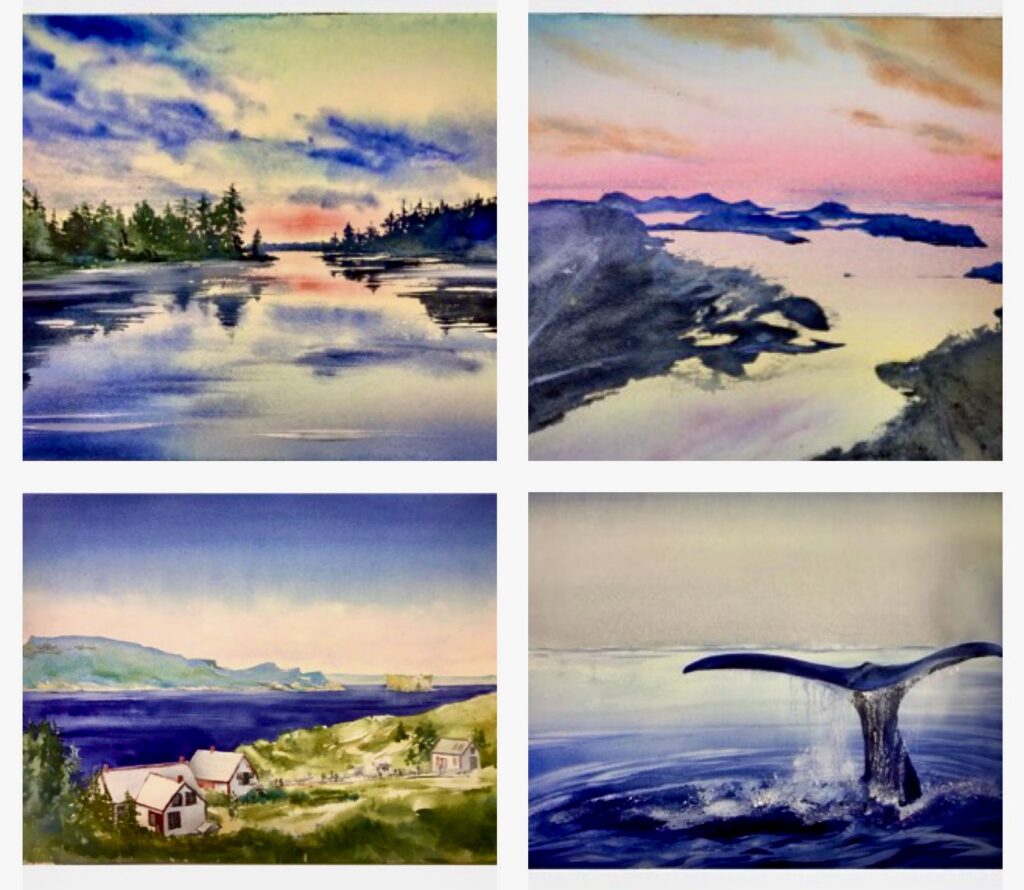
Quebec is one of the mini-courses of the Canadian landscape set of courses. Quebec constitutes nearly one-sixth of Canada’s total land area, Quebec is the largest of Canada’s 10 provinces in area and is second only to Ontario in population. You will explore landscapes through the beauty of Quebec’s lakes, National parks and the ocean coast of this incredible province.
In this course you will improve your skills in painting seascapes, coast lines, sky and whales. You will work developing your eye for light and reflections, shading, atmospheric perspective and depth.
FREE BASIC watercolour tutorial WHALE from course Canadian Landscape Quebec
NEWFOUNDLAND AND LABRADOR

This mini course takes you to the East coast of Canada where you will learn to paint puffins and ocean coast landscapes.
In this course you will learn to create outstanding landscape painting within 1 or 2 hours. The minimum colours in your palette will give you absolute freedom and will help you to train your vision. You will finish at least four large paintings plus practical exercises.

FREE BASIC watercolour tutorial PUFFINS from course Canadian Landscape Newfoundland and Labrador
NOVA SCOTIA
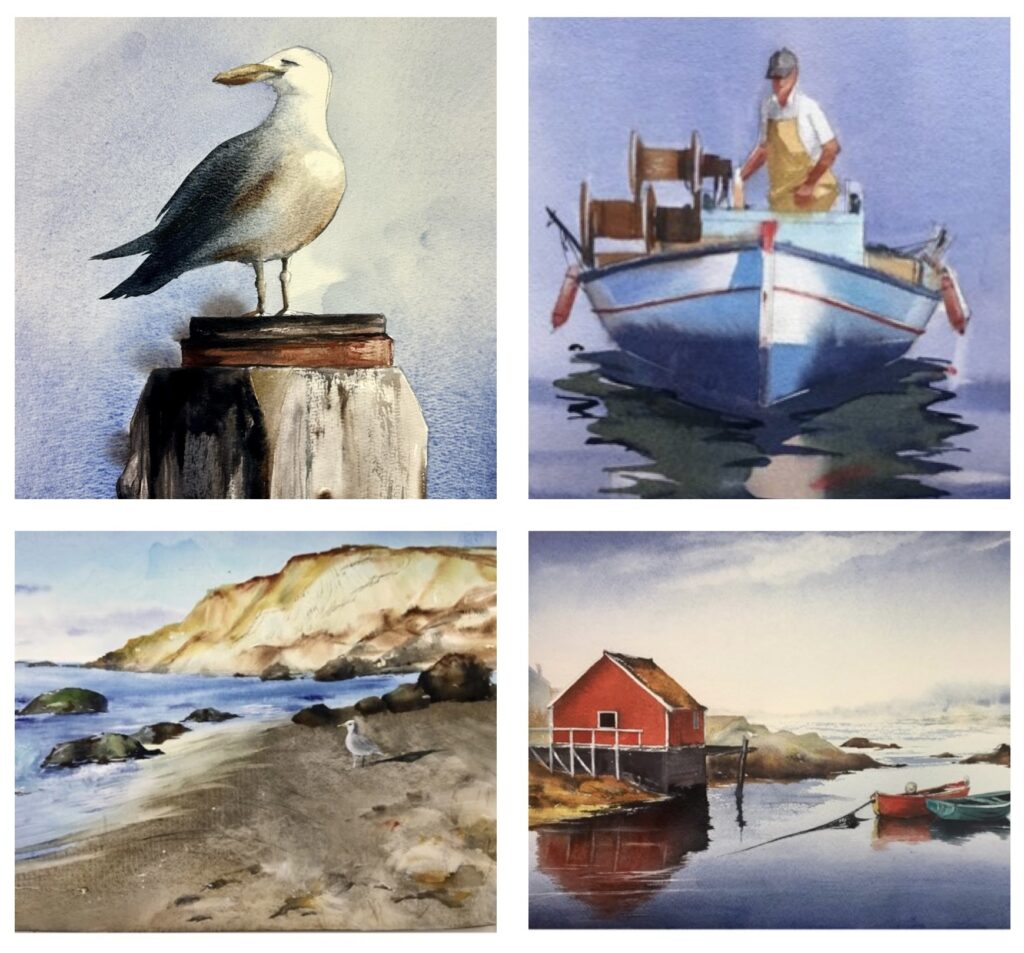
This mini course takes you to one of Canada’s Maritime provinces – Nova Scotia. The province is almost entirely surrounded by water and boasts over 13,000 km of coastline, thousands of lakes, lush valleys, whales and the world’s highest tides.
In this course you will improve your skills in painting seascapes, coast lines, surf and sand. You will experiment with the colour palette to create waves, wet send, birds and reflections. You will finish at least four large paintings plus practical exercises.

FREE BASIC watercolour tutorial STONES from course Canadian Landscape Nova Scotia
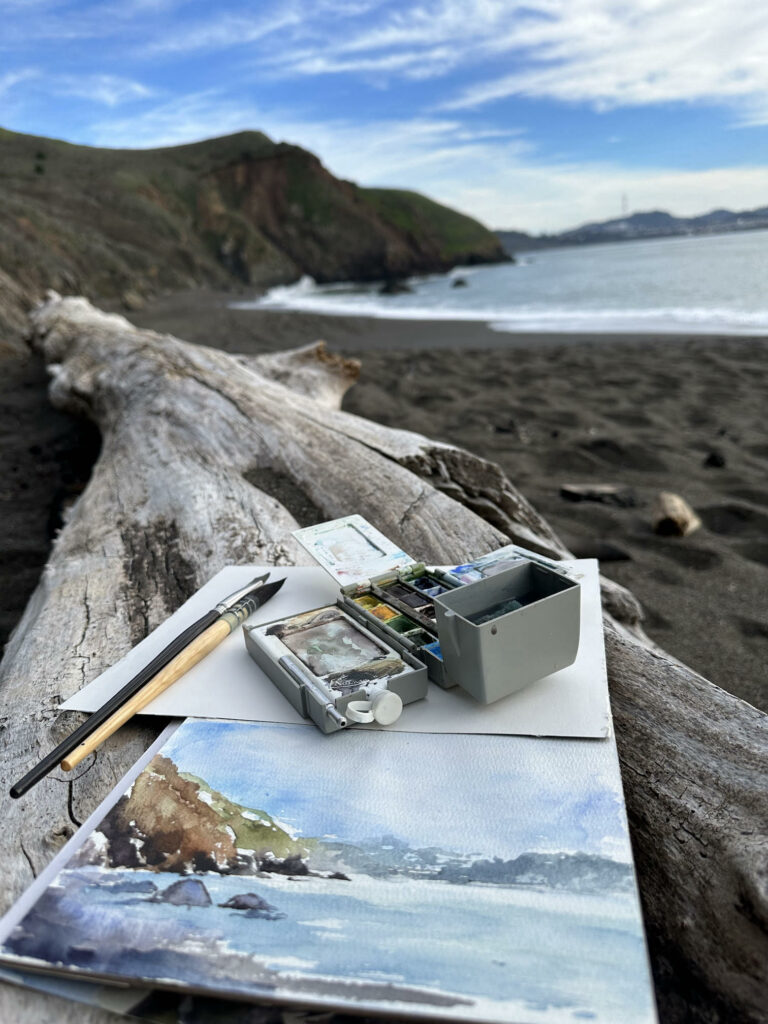
Materials that I am going to use during the course;
This list is only for your information, there is no need to get exactly what I am using:
If you are beginner, please read this article (link)
To accomplish all exercises and paintings from this course you will need the following materials:
Paper:
- Printer paper: a few pieces for printing references, and a few pages for practical exercises
- Parchment paper: couple small pieces for practical exercises
- Watercolour paper: a few small pieces (half of printer paper) and one piece (at least A4) of watercolour paper per lesson, the best is 100% cotton, 300g/m2, cold press or rough surface, recommended brands ARCHES, BAOHONG, FABRIANO
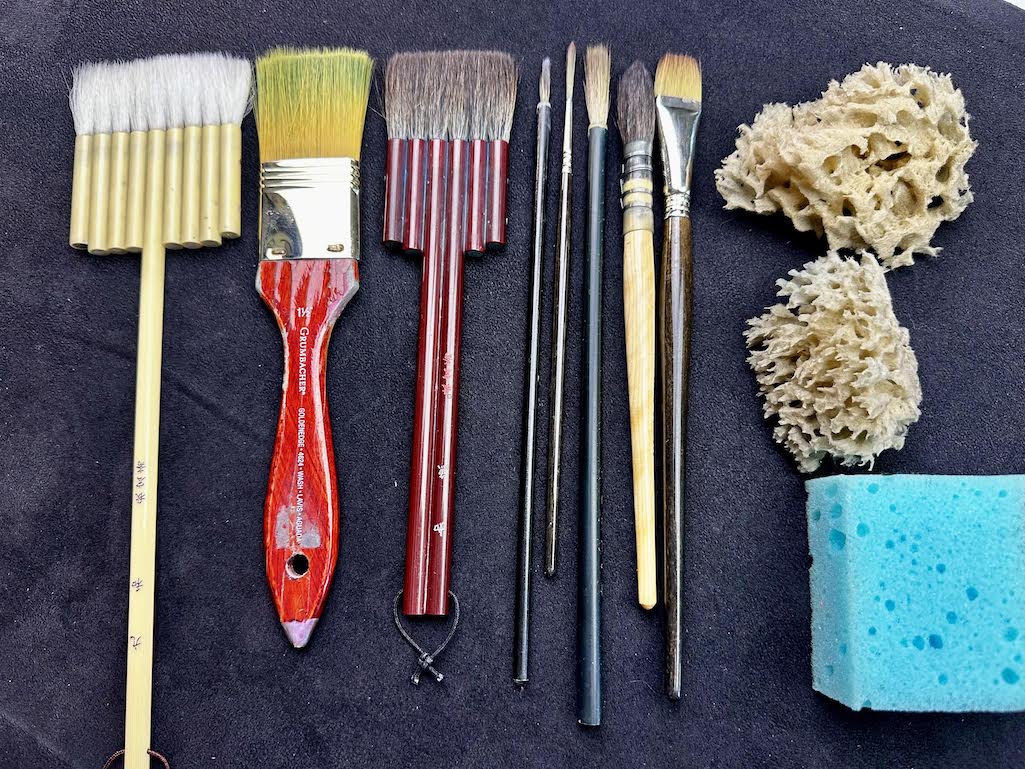
Watercolour brushes:
- Round # 10-12, # 6 and # 2; Escoda, Paul Rubens (link) or Dainayw (link)
- calligraphy brush (link)
- flat synthetic brushes: 3/4 and 1 1/2 or larger (Grumbacher, Santa Fe Art Supply, Connoisseur )
- Liner brush (Princeton, Artist’s Loft)
Watercolour paint:
The list of paints:
Buff Titanium, Daniel Smith; or you can mix Yellow Ochre and Neutral Tint
Cadmium Yellow, Daniel Smith
Yellow Ochre, Daniel Smith
Transparent Orange, Schmincke (for Paint Library)
Burnt Sienna, Daniel Smith
Burnt Umber, Daniel Smith
Sepia, Daniel smith
Quinacridone Red, Daniel Smith (or any Red)
Opera Pink, Daniel Smith (for Paint Library)
Madder Lake, Daniel Smith (for Paint Library)
Carmine, Daniel Smith (for Paint Library)
Magenta, Daniel Smith
Undersea Green, Daniel Smith
Olive Green, Van Gogh
Cobalt Blue, Daniel Smith
Ultramarine, Van Gogh
Cerulean Blue, Van Gogh
Lavender, HWC
Indigo, Van Gogh
Neutral Tint, Daniel Smith
Payne’s Grey, Van Gogh
OPTIONAL: Additional paints:
Lemon Yellow or any light yellow, Daniel Smith
Naples Yellow, Holbein
Aussie Red Gold, Daniel Smith / Indian Yellow, M.Graham / Quinacridone Gold, Winsor&Newton
Quinacridone Burnt Orange, Daniel Smith
Quinacridone Rust, M.Graham
Quinacridone Purple, Daniel Smith
Gold Green, Daniel Smith
Viridian, Daneil Smith
Delft Blue, Schmincke
Royal Blue, Holbein
Prussian Blue, Daniel Smith
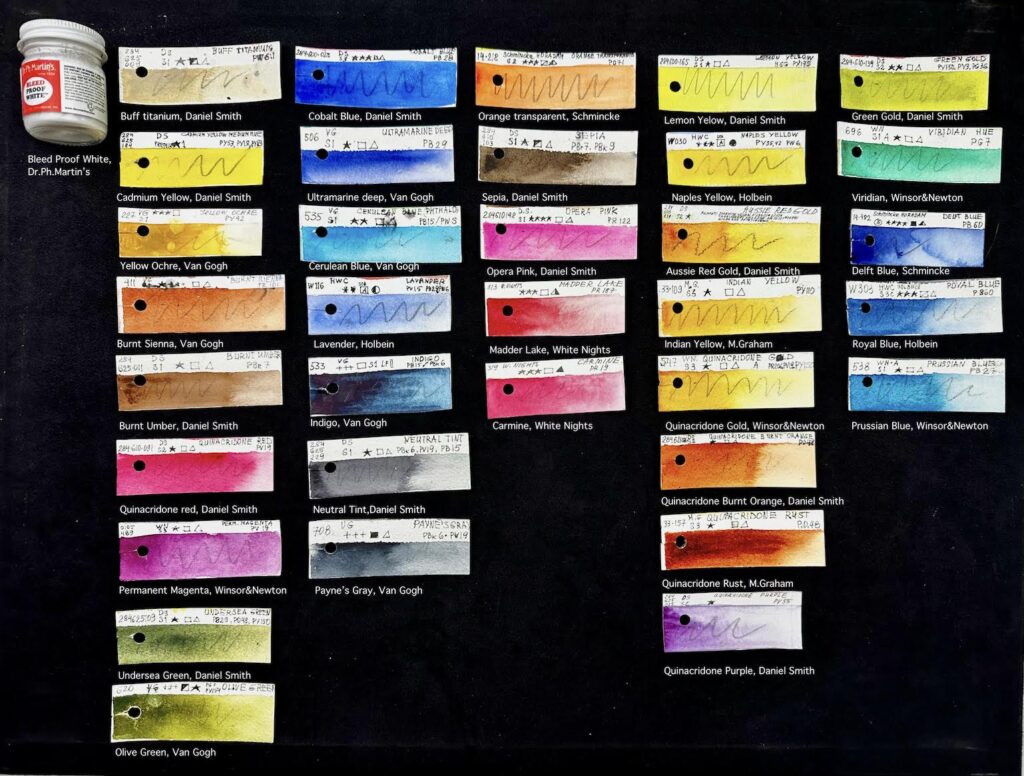
White Gouache and/or Bleed Proof White by Dr Ph Martin's (the best results)
Masking liquid and a small cheap brush (optional for Lesson 6)
Sea sponge
Kitchen sponge
Plexiglass board (any plastic board that the wet paper will stick to); You can use any smooth surface board big enough to place your paper on it; glass, mirror, flat baking sheet
Watercolour board or heavy cardboard for exercises
Watercolour palette with a large surface for mixing pigments. Alternatively, you can use a white ceramic plate
Artistic tape, different width (from 3 mm to 2 cm)
Food wrap or plastic bag (optional for Lesson 1)
A Pencil HB and Eraser
Nano mister (link) and water spray (optional)
Two large jars for water
Paper towels and Kleenex
Hair dryer